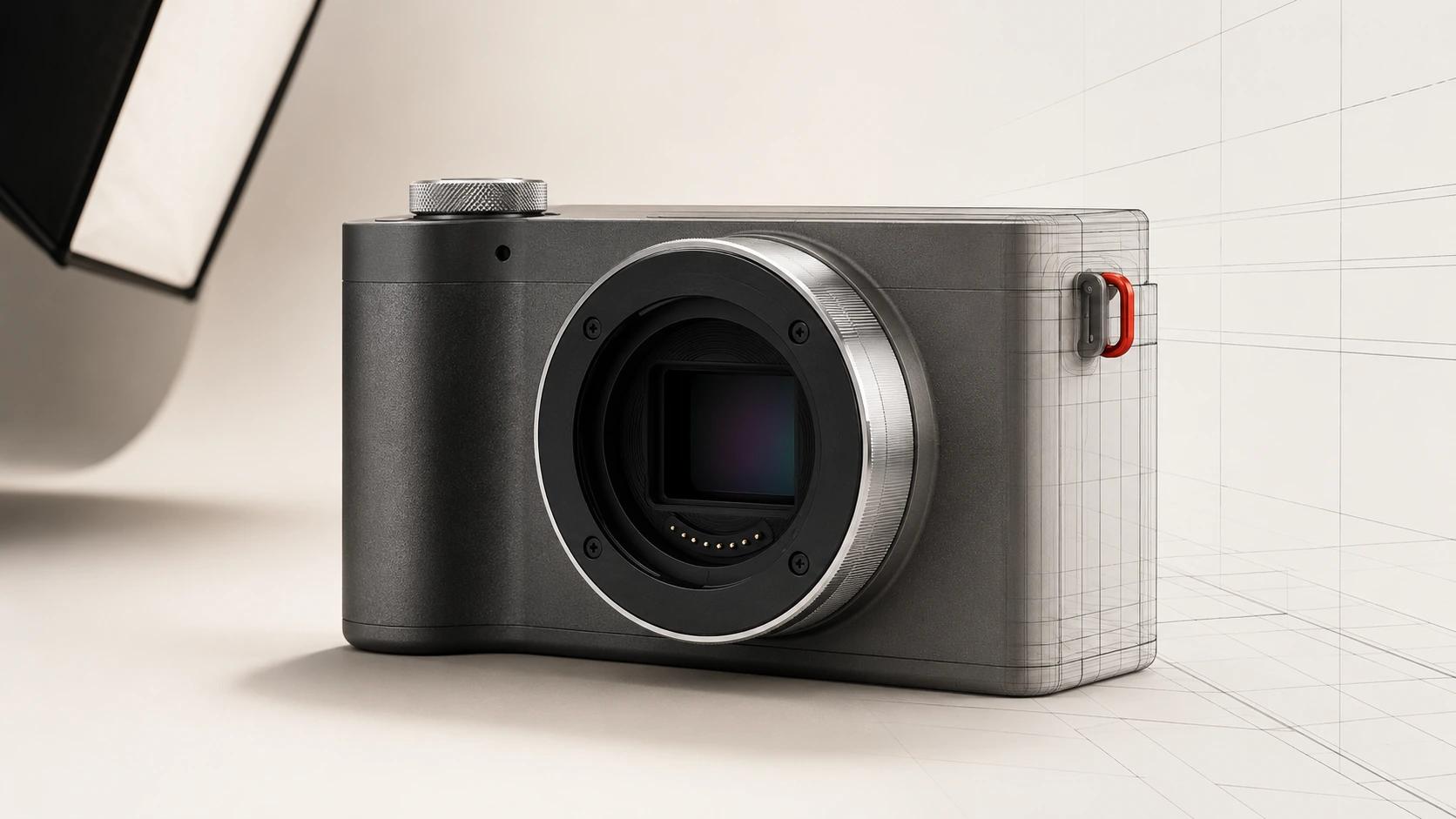
CGI wins when the product is not ready to photograph, the catalog contains structured variants, or the business expects to reuse an approved 3D source across many images and campaigns. Product photography wins when a finished sample exists, the actual surface or natural variation is the evidence, and the required shot set is small and stable. Neither medium wins by default.
The phrase "3D product photography" often hides two different decisions. A team may want still images rendered from a digital product model, or it may simply want product images with more depth and polish. This guide compares CGI stills with camera-based product photography. It does not assume that an interactive model, a turntable photo spin and a rendered still are the same deliverable.
Choose the route by the uncertainty it must remove. If the main uncertainty is whether a real finish, fabric, food, liquid or handmade detail will look right, photographing the approved item can be the cleaner proof. If the uncertainty is how to show an unreleased design, a large variant family or a sequence of controlled campaign states, a governed 3D asset can be the stronger production base.
The choice in one table
This is a buyer-side comparison, not a universal scorecard. A "stronger" route still needs a competent brief, suitable source material and an acceptance test.
| Decision condition | CGI is usually stronger when... | Photography is usually stronger when... | Check before committing |
|---|---|---|---|
| Physical availability | No approved sample exists, but dimensions, CAD and finish decisions are sufficiently resolved | The finished product is available in the right revision and condition | Which source controls form, color, graphics and finish? |
| Variants | Many states share governed geometry, cameras and material logic | A modest number of physical variants already exists and a repeatable rig can capture them | Are variants color, label, material, geometry or configuration changes? |
| Realism | The product can be reconstructed and validated from reliable evidence | The real surface, irregularity or physical behavior is itself the evidence | What visible property must the image prove? |
| Revisions and reuse | Future images can start from an editable, licensed source scene | Likely changes fit within raw processing, retouching or an easy repeat shoot | What changes are expected, and what files will remain available? |
| Campaign needs | The brief calls for controlled impossible locations, cutaways, exploded views or repeated compositions | The brief depends on real-world spontaneity, physical interaction or one contained shoot | Which shots genuinely need the chosen medium? |
A mixed result is normal. One campaign can use photography for the finish-critical hero and CGI for colorways, exploded views and later seasonal settings. Treat hybrid production as a deliberate design, not a compromise added after one route fails.
Start with product truth
A camera records light from a physical object. A renderer calculates an image from geometry, materials, lights and a virtual camera. Both routes still interpret the product.
Controlled photographic work manages the full imaging system. Federal technical imaging guidance, although written for cultural-heritage capture rather than commerce, measures variables such as white balance, illumination uniformity, color accuracy, reproduction scale, sharpening and noise.[1] Adobe also documents lens defects that can vary with focal length, aperture and focus distance, along with profile-based correction for distortion, vignetting and chromatic aberration.[2] Photography is direct physical evidence, but it is not an automatic guarantee of neutral color, undistorted shape or useful lighting.
CGI moves the evidence upstream. The artist needs approved geometry, dimensions, material behavior, graphics and construction details. OpenPBR defines a physically based surface model intended to cover a broad range of CG materials, while noting that specialized cases may need a bespoke or renderer-specific network.[5] A plausible shader is still not proof that the coating, weave, translucency or texture scale matches this product.
Before choosing a medium, create a source hierarchy. Name the current product revision, controlling geometry, finish reference, label artwork and final approver. If those sources disagree, the project has a product-truth problem. A camera may capture the wrong prototype faithfully; CGI may render an outdated CAD file beautifully.
The process and handoff details for the rendered route belong in 3D Product Rendering: Process, Inputs and Deliverables. This comparison stays with the medium decision.
The five-factor decision model
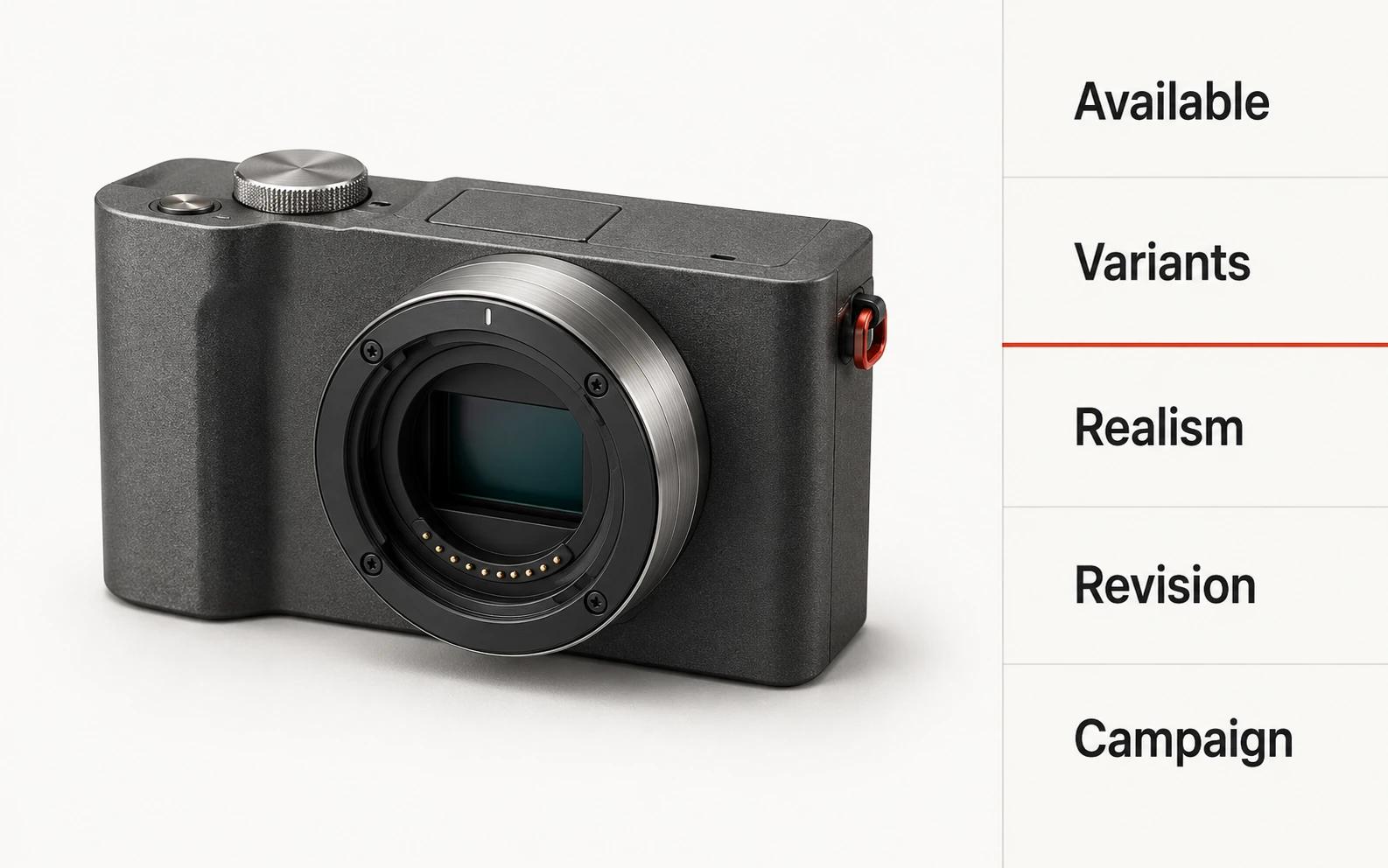
Use the five factors below in order. Do not average them into a single score. One blocking fact, such as a missing finish reference or a product that cannot be shipped, can outweigh several mild preferences.
1. Physical availability
CGI has a clear operational advantage when imagery must begin before a physical sample exists. That advantage is real only if the digital inputs describe a settled product. Approved CAD plus finish and artwork records can support useful work. Preliminary geometry with unresolved seams, controls or materials can produce a polished image of a product that will never ship.
Photography needs the right object in the right condition. Add the time and ownership involved in sample preparation, transport, assembly, cleaning, styling, return and replacement to the scope. For a large, fragile, location-bound or unreleased item, those constraints may drive the choice. For a small finished product already beside an established photo rig, they may be trivial.
Use photography when the sample carries information that the digital pack does not: hand-applied texture, natural grain, fabric drape, liquid behavior, food variation, translucent layering or manufacturing tolerances visible at the planned crop. Use CGI before sample availability only after an approver accepts which details are exact, which are provisional and which must not appear in the image yet.
2. Variants
Count the type of change, not just the number of SKUs.
| Variant type | What changes | CGI question | Photography question |
|---|---|---|---|
| Color or simple finish | Surface values while form stays fixed | Is the material response validated, not merely recolored? | Do physical samples exist under the same capture setup? |
| Label or artwork | Graphic content and placement | Are print effects, scale and placement governed? | Can artwork changes be swapped or retouched without misleading the viewer? |
| Material construction | Weave, grain, coating, transparency or layer behavior | Does each material need separate measurement and look development? | Will lighting expose the relevant difference consistently? |
| Geometry | Parts, dimensions, seams, controls or accessories | Can one controlled source branch without damaging the base asset? | Does each physical version exist and fit the rig? |
| Configuration | Valid combinations of parts and finishes | Are the option rules known and reviewable? | Which combinations truly need their own captured image? |
OpenUSD's official variant tutorial shows one source scene holding authored shading alternatives and selecting one for the composed result.[6] That is a useful technical pattern, not a promise that variants are free. Every approved option still needs correct data, material work, rendering, review and delivery. Geometry variants can reopen more of the asset than a color change.
Photography remains competitive when physical variants are ready, handling is simple and the studio can repeat camera, lighting and placement. CGI becomes more attractive when variants share substantial approved source work and will recur across later image sets. Unknown variant rules weaken both routes.
3. Realism
Ask what the image must prove. "Photoreal" is too vague.
For form, compare silhouette, proportions, gaps, radii and part relationships against the controlling source. For materials, identify the behavior that matters: highlight width on a coating, weave scale, grain direction, edge transmission, subsurface scattering, clear-layer depth or micro-surface roughness. For presentation, judge camera perspective, light direction, contact, background and the crop where the customer will see the image.
OpenPBR separates material behavior into physical components and allows implementations to approximate the target at different fidelity levels.[5] Khronos' current 3D-commerce guidelines likewise describe geometry, material variables, textures and shaders as separate parts of a product asset.[8] Those systems make sophisticated CGI possible. They do not supply the missing product measurements or approve an artist's interpretation.
Photography deserves the same discipline. A raw capture is interpreted into a color image, and a color-managed workflow carries that interpretation across input, display and output devices.[3][4] Embedded profiles help another system interpret color data, but they cannot make every display or print reproduce a finish identically.[4]
Choose photography when observing the actual object is the shortest path to the required evidence. Choose CGI when the team can define and validate that evidence digitally, or when the required view cannot be captured safely or physically. For difficult finishes, run a matched proof: the same product zone, viewing angle and lighting intent in a controlled photograph and a test render. Approve the material before scaling the image matrix.
4. Revisions and reuse
Separate an image edit from a product change.
Photography has more post-capture flexibility than a flattened JPEG suggests. Adobe's current Camera Raw documentation says the original sensor data can be preserved while white balance, tone, contrast, saturation and sharpening are reprocessed non-destructively.[3] Retouching can also remove dust, refine masks, adjust a background or prepare new crops. It cannot reveal an unseen side, correct a changed housing or turn one physical material into another without creating new evidence and review risk.
CGI can retain cameras, lights, geometry, materials and render settings. Render passes may separate diffuse color, lighting, depth, normals and masks for compositing.[7] That can make some image changes more controlled. A product geometry revision still has to be modeled, propagated through variants and checked in every affected view. A new material still needs evidence and approval.
Reuse depends on the handoff. Khronos distinguishes flexible native authoring files from interchange and consumer delivery formats.[8] Final stills or an optimized delivery model are not the same as an editable source scene. State whether the buyer receives the scene, geometry, textures, material definitions, dependencies, cameras, lights and rights needed for later work. Record software versions and any licensed component that cannot travel.
Photography may be easier to repeat when the sample, rig and crew remain available. CGI may be easier to adapt when the source scene is clean, documented and owned. Price neither route on imaginary reuse. Name the future outputs, then include only the reuse that the team expects and can govern.
5. Campaign needs
A product page packshot, a launch key visual and a technical cutaway are different jobs. Map the shot list before picking the medium.
Photography is strong for a contained shoot built around the real object, practical set detail and physical interaction. It can also capture unplanned surface behavior that would take longer to reconstruct than to observe. CGI is strong when the campaign needs controlled repetition, an unreleased location, an exploded assembly, a transparent cutaway, a camera path through a mechanism or a composition that must be reproduced across many variants.
Do not force every frame through one pipeline for consistency. Define the visual constants instead: camera character, product scale, light direction, shadow density, background values, color pipeline and crop rules. A hybrid team can then match photographic and rendered frames against those constants.
Use 3D Product Renders for E-commerce: PDPs, Ads and Marketplaces to plan channel-specific image roles, and A Product Render Shot List for a Complete Digital Launch to turn those roles into a controlled shot matrix. This page owns the route choice, not the full channel or shot-list brief.
Build a scenario calculator with your own inputs
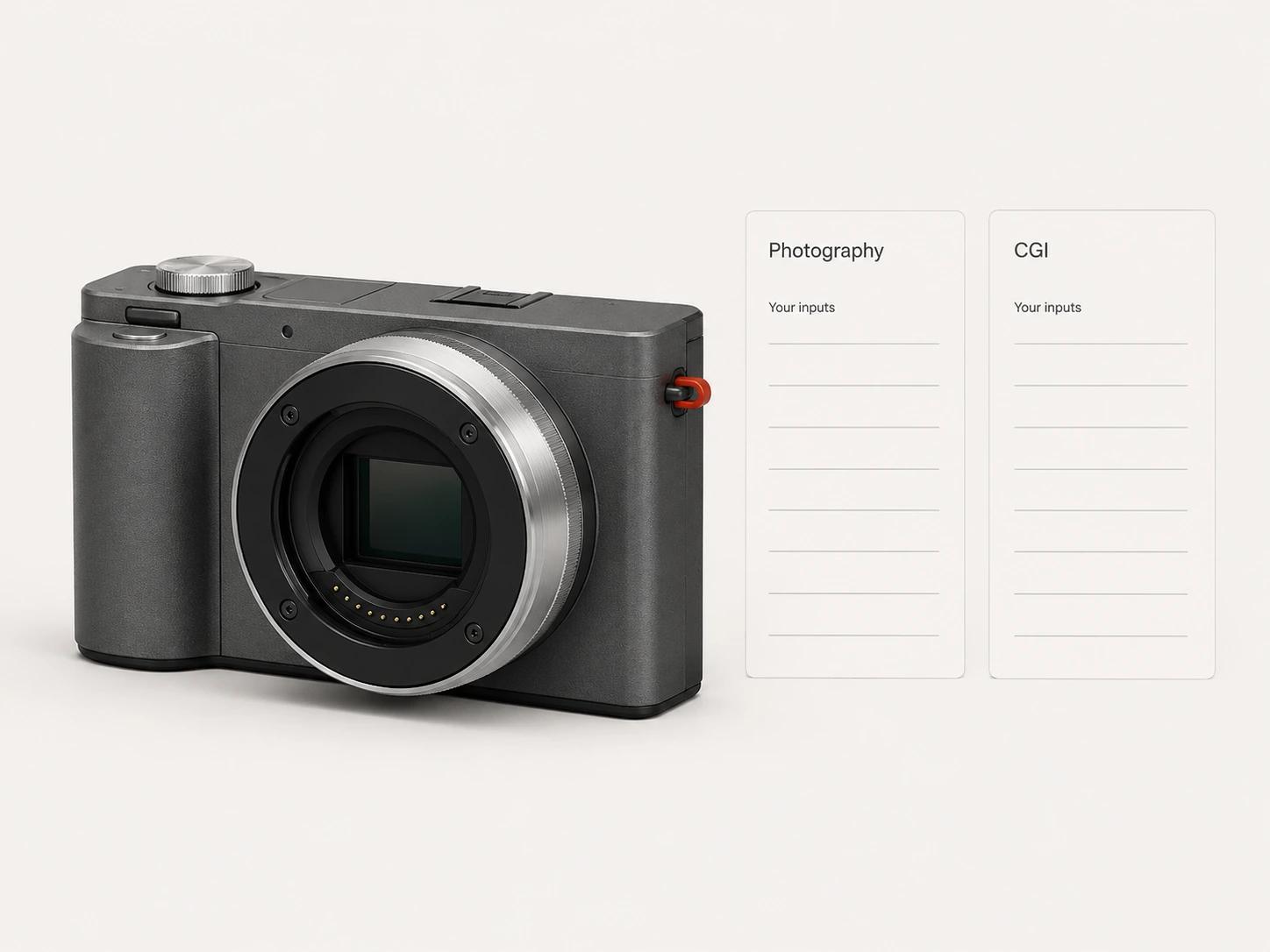
The calculator should compare like-for-like scopes. Leave every price, hour, probability and reuse assumption blank until your team supplies it. An unknown is not zero.
| Input group | Photography scenario: enter your data | CGI scenario: enter your data | Hybrid scenario: enter your data |
|---|---|---|---|
| Source readiness | Sample preparation, transport, assembly and replacement | CAD cleanup, reconstruction, measurement, material and artwork preparation | Reference-sample capture plus digital source preparation |
| Initial image matrix | Studio, equipment, crew, set, styling and capture | Modeling, look development, scene build, rendering and retouching | Captured reference or hero work plus selected CGI outputs |
| Variants | Handling and capture for each physical state, plus retouching | Work by color, artwork, material, geometry and configuration change | Which states are photographed and which branch from the approved asset |
| Change allowance | Your expected reshoot or post-production allowance | Your expected remodel, material update, rerender and review allowance | Your expected recapture, model update and matching allowance |
| Future named uses | Later shoots and adaptations you genuinely plan | Later renders and channel adaptations you genuinely plan | Later uses assigned to the most suitable source |
| Handoff and rights | Raw files, layered masters, usage terms and archive | Source scene, dependencies, editable asset rights and archive | Rights and files for both routes, plus matching references |
| Unresolved risk | Product availability, damage, schedule and repeatability gaps | Product-data, material, software and asset-governance gaps | Integration, matching and dual-pipeline ownership gaps |
Use three transparent expressions:
Photography scenario total = source readiness + initial image matrix + variants + change allowance + named future uses + handoff + unresolved-risk allowance
CGI scenario total = source readiness + initial image matrix + variants + change allowance + named future uses + handoff + unresolved-risk allowance
Hybrid scenario total = photography components + CGI components + matching and coordination components
Populate the expressions with comparable supplier quotes or internal effort values. Use the same product revision, image matrix, delivery specification, review rounds, usage period and rights boundary in every scenario. Run a base case and separate change cases, such as a new label, a revised component or an added campaign setting. Do not bury an uncertain future catalog inside the base case.
The lower modeled production total is not automatically the better decision. Read it beside the evidence risk: can this route prove the product property the image must communicate? The framework compares production scenarios. It does not invent revenue, conversion, savings or commercial uplift.
Enter your own scope, quotes, change assumptions and named reuse cases. Keep unsupported commercial outcomes out of the comparison.
When each route is the better answer
Choose CGI when the source can outlive the first image
CGI is a good fit when the physical product is unavailable or impractical to shoot, the design inputs are approved, variants share controlled structure, and future views or campaigns are already named. It also earns its place for impossible, destructive or internal views that photography cannot capture directly.
Do not choose it because a rendered image looks impressive in a portfolio. Confirm product truth, difficult-material evidence, source-asset ownership and the people who will maintain the asset. If those are absent, the promised reuse may disappear after the first delivery.
Choose photography when the object is the best evidence
Photography is a good fit when a finished product is available, the shot list is bounded, and actual surface behavior or natural variation matters more than future scene flexibility. It can be the simpler route for a one-off launch image, a stable set of physical SKUs or a product whose irregular detail would be expensive to reconstruct and hard to approve digitally.
Do not dismiss photography as inflexible. A repeatable rig, preserved raw files, layered masters and clear capture notes can support useful revisions and future crops. The boundary is physical change: a new part, unseen angle or unavailable variant may still require another shoot.
Use a hybrid route when proof and extension are different jobs
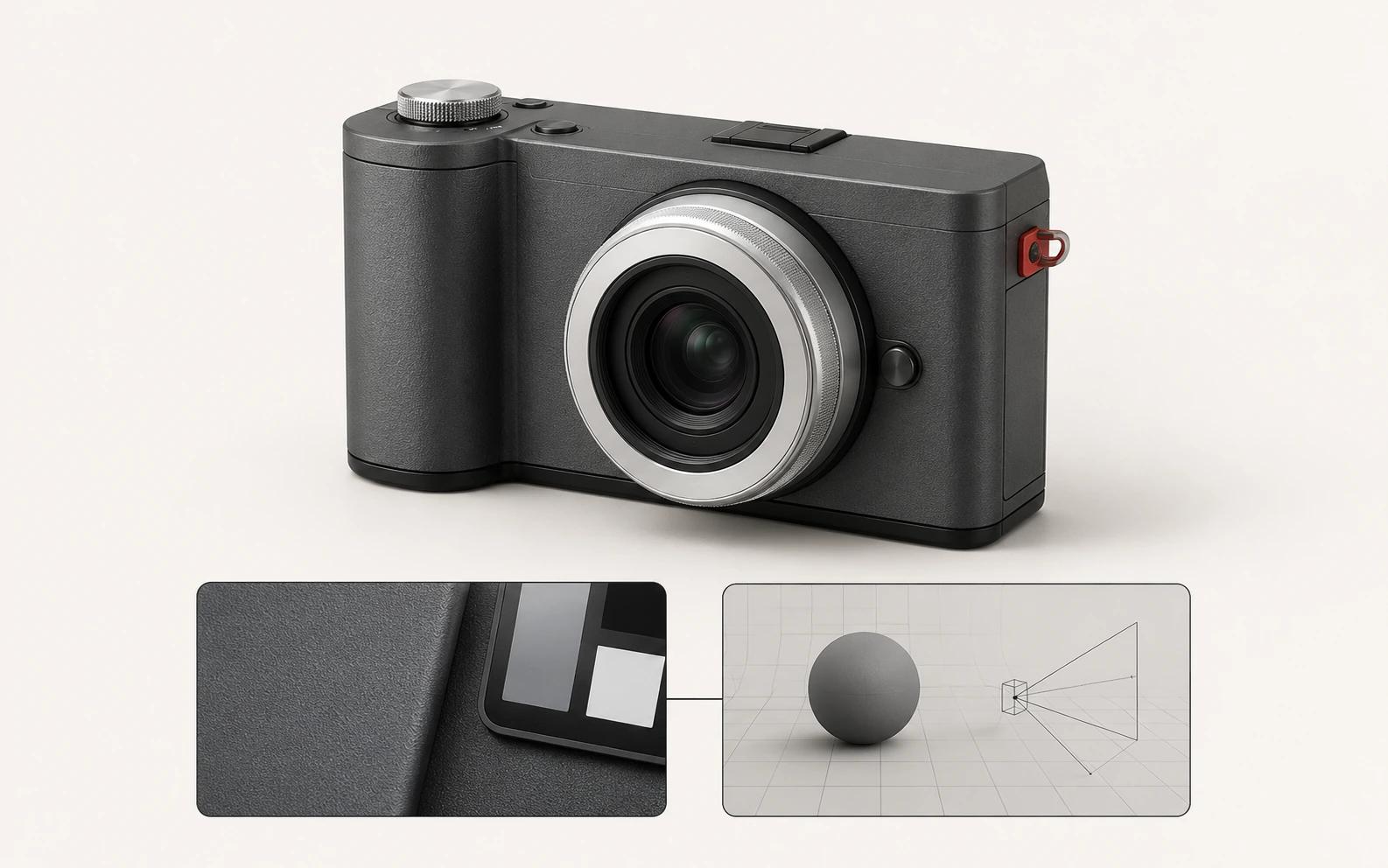
A hybrid workflow can photograph the approved sample to establish finish, texture and physical reference, then use that evidence to validate a 3D asset. The final campaign might keep the photographic hero while rendering colorways, exploded details or settings that need controlled reuse. It might also place a rendered product into a photographed environment, provided perspective, light, contact and color are matched and the composite is reviewed at delivery size.
Assign one owner to the shared visual constants and one source of truth for each product fact. Without that governance, hybrid work can double review effort instead of combining strengths.
Run a proof before scaling
Test the risk that will decide the route. Pick one representative product, one finish-critical view and one campaign view. Supply the same approved product information to both workflows where practical. Judge the outputs against a written checklist rather than asking which image "feels more real."
Check form, material behavior, graphics, camera, crop, shadow, color pipeline and delivery requirements. Record which corrections changed only the image and which exposed missing product data. Keep the proof files and assumptions so the business-case inputs reflect an observed workflow, not a borrowed benchmark.
The result can support three valid decisions: continue with photography, continue with CGI, or split the shot matrix. A fair proof does not need CGI to win. It needs to reveal which route controls the important uncertainty with an acceptable handoff.
When the rendered route is justified and the source, shot matrix and review owners are clear, the 3D product rendering service is the commercial next step. Bring the comparison inputs with you; they are more useful than a blanket request to replace photography.