3D modeling outsourcing should be evaluated as a controlled production system, not a portfolio contest. A polished render can show taste and craft. It does not show how the team handles conflicting CAD, restricts access to an unreleased product, records revisions, absorbs a larger catalog, or returns editable work when the relationship ends.
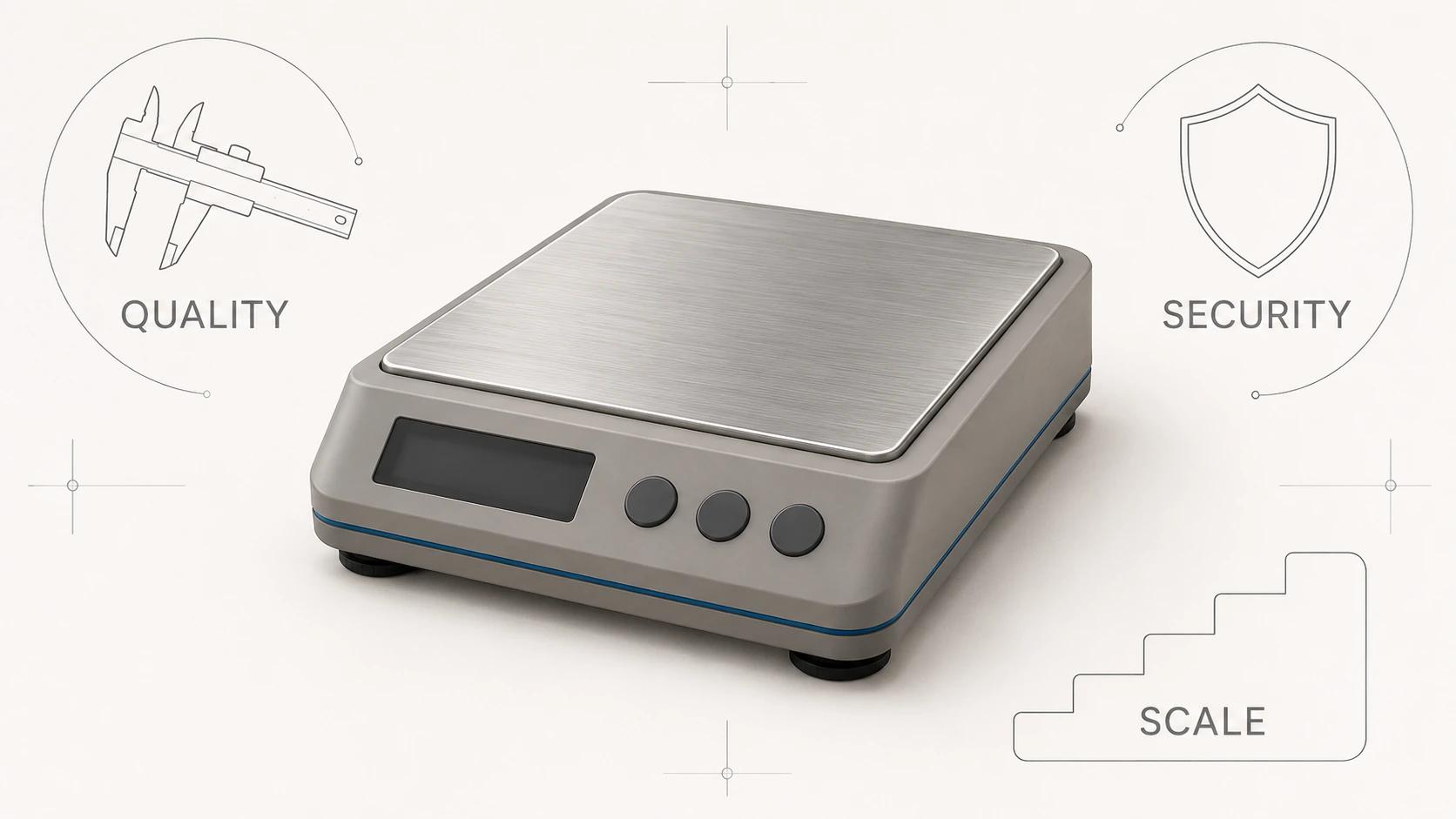
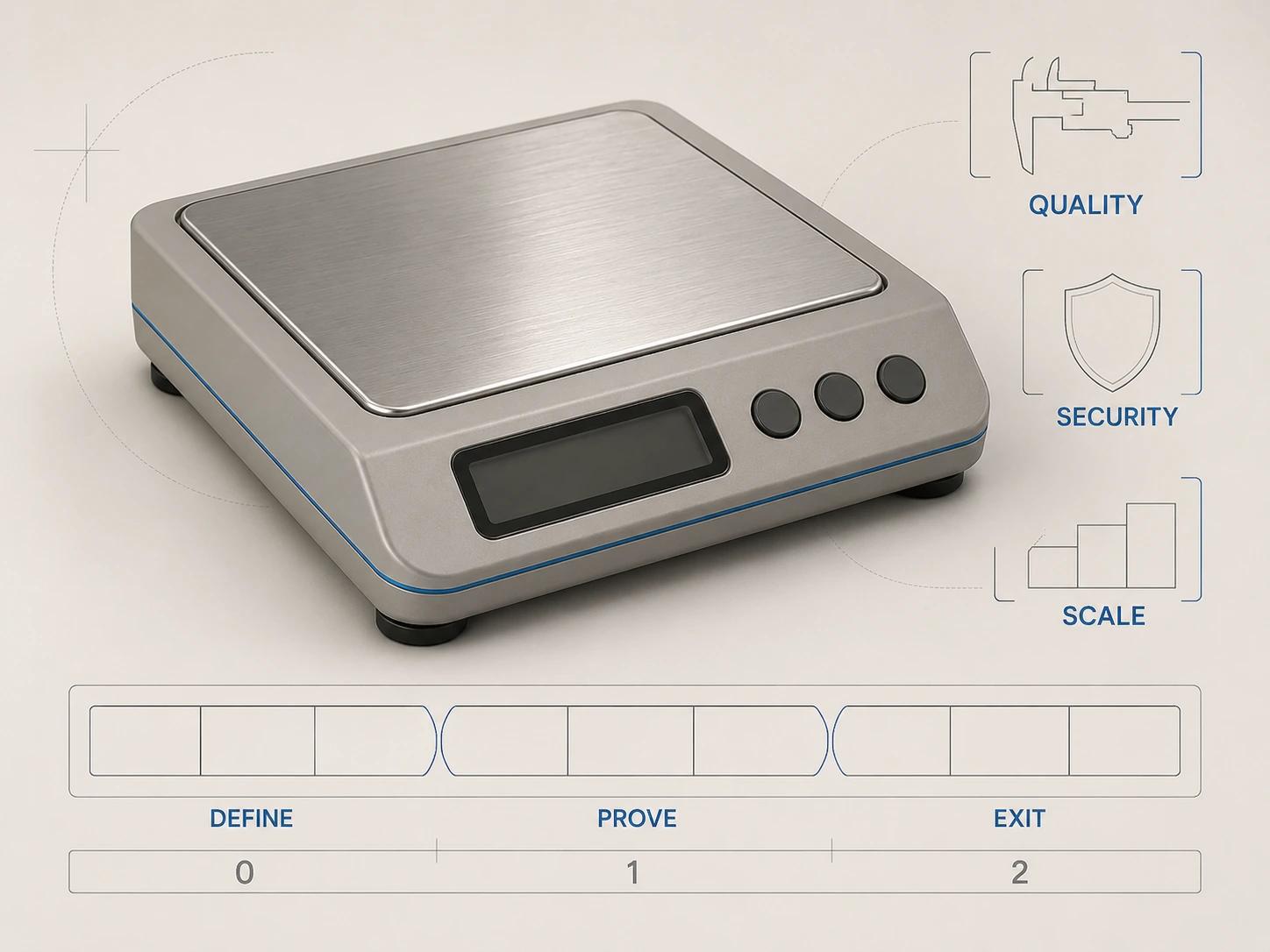
A defensible selection process has four parts: issue an acceptance-ready brief, run one representative test SKU through the real workflow, inspect the evidence behind the delivery, and test both a controlled revision and an exit handoff. Keep quality, security and scale as separate decisions. A strong result in one area must not cancel a hard failure in another.
Use this guide to decide whether an outsourced production route can meet your quality, security, scale and exit requirements. For the upstream definition of inputs, accuracy levels and deliverables, use 3D Product Modeling: Inputs, Accuracy Levels and Deliverables.
Separate quality, security and scale before scoring
Quality asks whether the delivered asset represents the approved product and meets its named technical and destination requirements. Security asks who can reach the source material, how it moves, where copies persist and what happens after access is no longer needed. Scale asks whether the same controls survive more SKUs, variants, reviewers and changes without turning the queue into a folder of undocumented exceptions.
Write a pass condition for each decision before meeting vendors. Otherwise a persuasive presentation can redefine success after the fact. A buyer might require product-critical dimensions to be checked against a named drawing revision, confidential files to remain inside an approved transfer and storage route, and every accepted asset to include an editable source package plus a manifest. Those are inspectable conditions. "High quality," "secure" and "scalable" are not.
NIST's cybersecurity supply-chain quick-start guide is aimed at technology products and services, but its acquisition logic is useful here: establish a way to manage third-party risk, then define and communicate supplier requirements.[1] Treat that as a governance model, not a claim that a 3D studio is certified or compliant with NIST.
Use a nine-part outsourcing due-diligence scorecard
The following scorecard is an original Double Edged editorial framework. Score only evidence observed in the proposed operating route:
- 0: absent, contradicted or supported only by a claim;
- 1: documented in part, but not demonstrated on the test SKU;
- 2: demonstrated on the test SKU and reflected in the proposed handoff or agreement.
Set non-negotiable gates separately. Ambiguous rights, unapproved subcontracting, shared accounts, an uncontrolled transfer route or refusal to provide an agreed exit package can block an award regardless of the total.
| Area | What to require | Evidence to inspect | A 2-point result means |
|---|---|---|---|
| 1. Brief | Product scope, uses, views, variants, source hierarchy, tolerances supplied by the responsible owner, deliverables and acceptance owners | Vendor restatement, assumption log and requirement-to-output map | The team finds conflicts and converts the brief into testable work without silently filling product gaps |
| 2. Source control | Named baseline, units, revisions, dependencies, conversion record and rules for superseded inputs | Source register, immutable IDs, scene structure and derivation log | A reviewer can trace visible geometry and materials to the approved inputs and identify every deliberate departure |
| 3. Test SKU | A risk-representative product sent through the proposed people, tools, transfer route and review gates | Complete test delivery, issue history and decision record | The sample exercises the likely production risks rather than presenting a specially polished showpiece |
| 4. QA | Separate product-accuracy, scene-technical and destination checks with pass criteria | Check results, comparison views, issue closure and exact revision reviewed | Acceptance rests on recorded evidence, not one beauty render or an unlabeled "approved" status |
| 5. Rights | Background IP, newly created work, third-party assets, licenses, portfolio use, subcontracting and permitted automation are addressed | Signed terms, asset and license register, contributor or subcontractor flow-down | The buyer can identify what it owns or may use, what remains licensed, and which restrictions survive delivery |
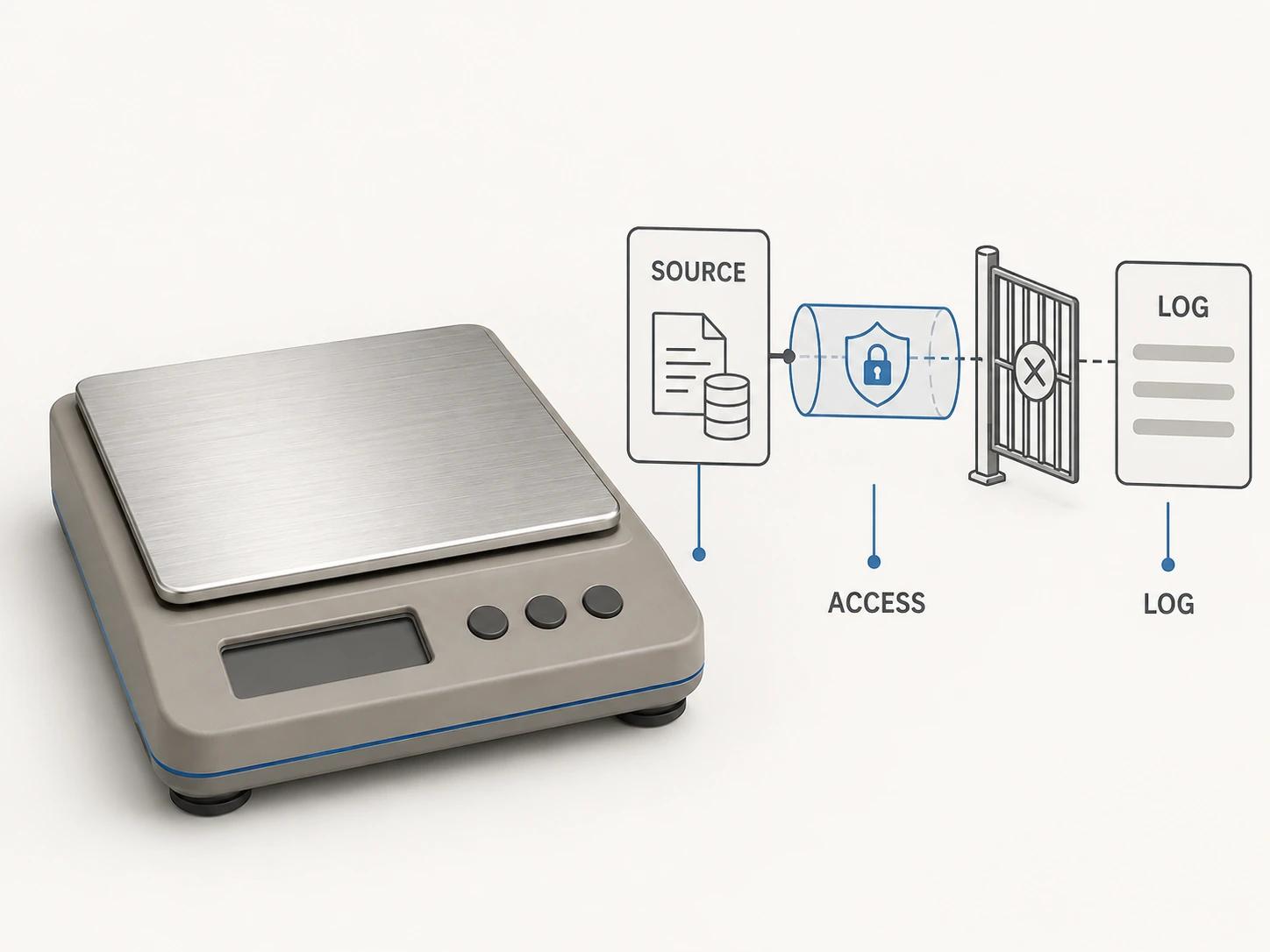
| 6. Access | Approved storage and transfer, named accounts, least privilege, logging, retention, incident route and revocation | Live walkthrough, access list, sample log and offboarding procedure | Project files follow the agreed route and access can be attributed, reviewed and removed |
| 7. Revision governance | Change intake, decision owner, impact analysis, version identity and reopen rules | Controlled change on the test SKU, change log and revised manifest | A change reaches every affected derivative without overwriting the prior accepted state |
| 8. Throughput | Intake limits, work-in-progress visibility, reviewer capacity, skill coverage, dependencies and escalation | Mixed-batch plan, queue view, measured accepted-output definition and continuity plan | Capacity is explained through observable constraints and accepted work, not a headline volume promise |
| 9. Exit handoff | Editable sources, textures, dependencies, manifests, open issues, rights records, return or deletion and retained-copy rules | Trial handoff opened by the buyer plus a signed-off exit inventory | Another authorized team can continue the agreed work without hidden project dependencies |
The total is a comparison aid, not a probability of success. Keep the row notes. Two vendors can reach the same score with very different risks, and a buyer may reasonably weight an unreleased design more heavily toward access control while a public catalog rebuild puts more weight on throughput and handoff.
Brief a test SKU that exposes real production risk
Choose a product that resembles the work you expect to outsource. It should include the normal source format and review path, plus one risk that matters: a reflective finish, an incomplete drawing, several visible part breaks, variant artwork, a web derivative or a feature that must remain dimensionally traceable. Do not choose the easiest object in the catalog, and do not invent an obstacle that will never appear in production.
Send the same controlled input package to every candidate that reaches the test. The package should name:
- the product and source revision;
- which source controls geometry, materials, artwork and variants when files disagree;
- intended still, animation, configurator or real-time uses;
- required editable, interchange and destination files;
- the views that expose important features;
- supplied dimensions or thresholds and who owns them;
- permitted reconstruction, simplification and substitution;
- the required manifest, QA record, change log and rights register.
If CAD must become a lighter commerce asset, define the evaluation boundary rather than prescribing an unexamined conversion recipe. The companion guide to CAD to Web 3D: What Gets Converted, Rebuilt and Optimized covers that production layer in detail.
Ask each team to return its reading of the brief before work starts. The useful response identifies conflicts, missing evidence and decisions that belong to the buyer. A vendor should not be rewarded for making a plausible product decision that nobody authorized.
Source control begins with the first transfer. Give the package an immutable baseline ID and require every delivery to name it. The derivation log should record imports, unit or axis treatment, rebuilt surfaces, omitted geometry, material substitutions, texture sources and unresolved assumptions. This matters more than whether both parties happen to use the same application.
Inspect QA as evidence, not taste
Start product review with attributes, not adjectives. Compare silhouette, proportions, visible construction, part presence, finish assignment, artwork, variant identity and any buyer-supplied critical checks against their controlling sources. Record the view, requirement, method, result, reviewer and asset revision. A contact sheet and closeups are useful evidence only when their identity is unambiguous.
NASA describes verification as confirmation against specified requirements using methods such as test, analysis, inspection or demonstration, with results, discrepancies and corrective actions recorded.[5] A commerce project does not need aerospace ceremony, but the underlying discipline is sound: choose a method that can answer each requirement, then keep the result.
Run three reviews rather than one:
- Product QA checks the visible product and variant against approved evidence.
- Scene QA checks scale, transforms, topology, normals, hierarchy, pivots, UVs, materials, textures, naming and missing dependencies within the agreed scope.
- Destination QA checks the exact export after it enters the named viewer, renderer, store or downstream tool.
For a glTF or GLB deliverable, Khronos describes its glTF Validator as a specification and schema conformance check, while the Asset Auditor compares an asset with a selected use-case profile and can report pass, fail or not tested.[6] Those tools can expose technical defects. They do not prove that the model depicts the correct SKU, that the material matches an approved sample, or that another destination will accept the file.
Require the final QA package to identify the exact files reviewed. A screenshot without a revision ID can outlive the asset it was meant to approve.
Evaluate rights, access and file transfer together
An NDA is one control, not a security system. WIPO lists confidentiality agreements alongside marking confidential information, technological and physical restrictions, periodic need-to-know reviews and access removal when people leave.[3] Ask how those measures operate on this project and which subcontractors, freelancers or affiliated entities will receive the files.
Rights language also needs more precision than "the client owns everything." In its US guidance, the Copyright Office says the person who creates visual art is generally its author and initial copyright owner, with work made for hire as a limited exception.[4] Rules vary by jurisdiction, so have counsel adapt the agreement. Operationally, the rights schedule should separate buyer-provided background IP, vendor tools and pre-existing libraries, newly created project work, third-party textures or fonts, open-source components, portfolio rights and any permitted generative tooling. State whether each item is assigned, licensed or excluded, and record restrictions that a downstream team must carry forward.
For file handling, the UK National Cyber Security Centre recommends protecting data in transit, at rest and at end of life; it also calls for authorized access, access logging and scrutiny of the assurances sought from third parties.[2] Translate that guidance into a project data-flow record:
- classify the input set and identify the approved storage regions or services;
- use named accounts, strong authentication supported by the service and the minimum access needed for each role;
- use an encrypted, authenticated transfer route instead of personal email or an open share link;
- record downloads, administrative access and unusual bulk export where the platform permits it;
- state backup, retention, return, deletion and legal-hold exceptions;
- define the incident contact, notification route and evidence-preservation steps;
- revoke access when a contributor leaves or no longer needs the project.
A certificate, policy document or tool demonstration can support due diligence, but none proves that the proposed accounts, storage, contributors and exit controls will be used correctly. Read the certificate scope if one is offered. Then test the project route. Do not request passwords, production credentials or unrelated customer data as evidence.
Test revision governance with one controlled change
After the first review, issue a legitimate change through the proposed channel. Change one approved attribute, such as a finish assignment, artwork revision or visible component state. The response should identify the controlling baseline, affected objects and variants, downstream files, review gates and prior accepted revision. It should also show who may approve the change.
Keep comments attached to immutable asset IDs. "Make the top darker" is not enough once several finishes and cameras exist. A useful issue names the product, variant, view, attribute, source, requested state and decision owner. If the request conflicts with the controlling evidence, the vendor should raise the conflict rather than silently obeying the latest message.
Inspect how the revised package arrives. The prior state should remain recoverable, the manifest should point to the new revision, and affected QA checks should reopen. This small test reveals more about source control than a diagram of an ideal workflow.
Test scale without accepting a volume promise
One test SKU checks craft and control on one path. It does not show what happens when intake, production and review overlap. Follow it with a small mixed batch that contains more than one geometry or material pattern, then observe the real queue.
Define throughput as accepted units at a named quality gate, not files submitted. A model returned for a missed variant is still work in progress. Ask the vendor to show how it limits concurrent work, assigns specialist and reviewer capacity, records blocked inputs, handles absence, discloses subcontracting and prevents one urgent SKU from hiding stalled work elsewhere.
Look for a capacity model that exposes constraints. It might track model complexity bands, variant count, texture work, animation or real-time derivatives, review load and buyer response dependencies. The labels are less important than consistent intake and historical evidence from the pilot. Do not turn one observed batch into a universal rate or ask for an unsupported guarantee.
Scale the controls with the queue. Every SKU still needs a baseline, owner, manifest, QA state, access scope and exit-ready package. Sampling can supplement checks where the buyer's risk policy allows it, but the vendor should state what is sampled, how it is selected and which defects trigger a wider review.
Make the exit handoff part of acceptance
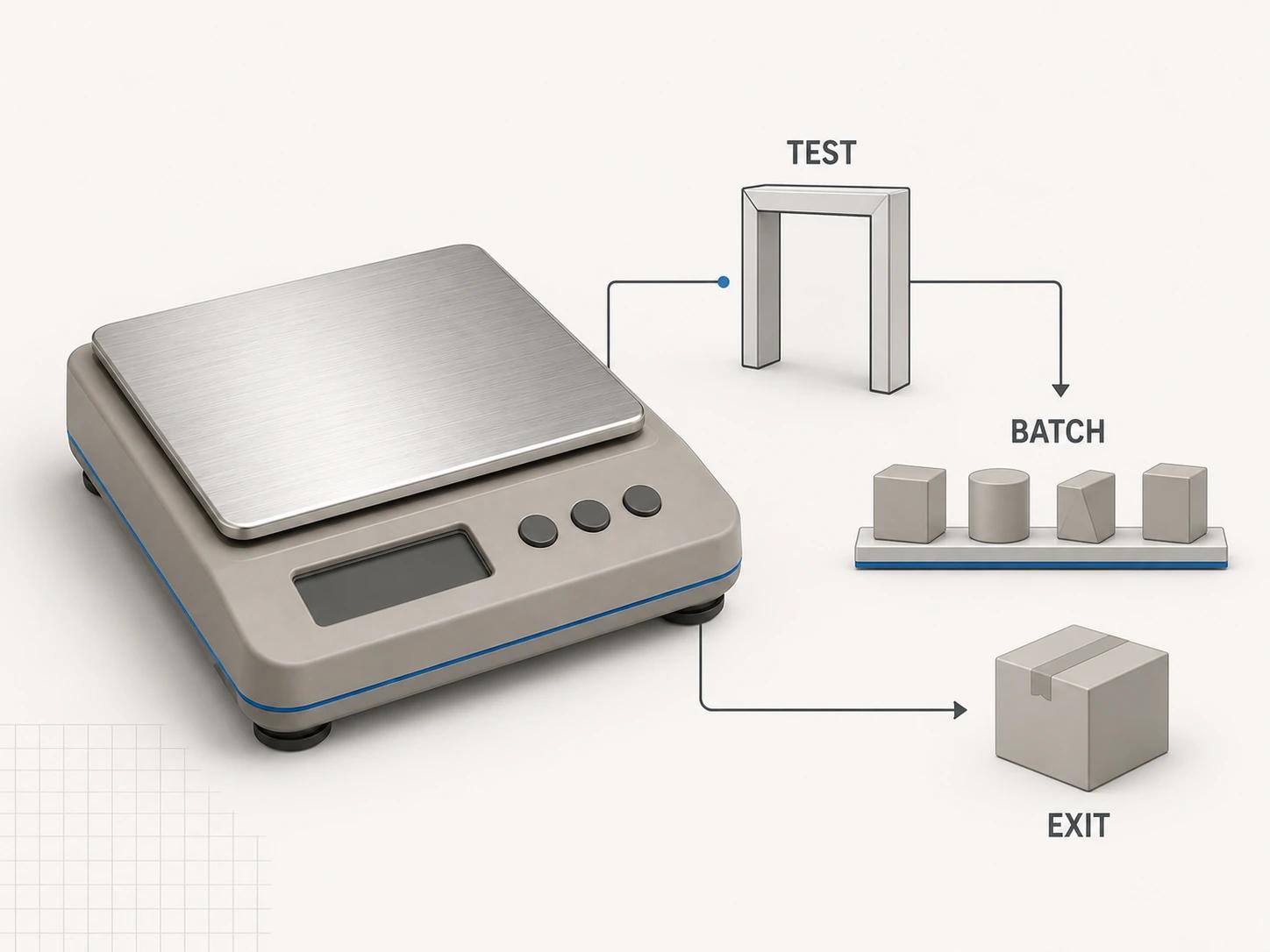
Do not wait for a dispute or supplier change to discover what "source files included" meant. Run a trial handoff during the test. Open the editable scene in the agreed environment and check that linked textures, caches, fonts, plug-ins and external references resolve or are documented. Confirm units, object and material names, pivots, hierarchy, variants, export settings and the relationship between the source scene and delivered derivatives.
The exit inventory should include the source register, editable scenes, interchange files where agreed, texture sources and baked outputs, dependency and license records, manifests, QA reports, change history, open issues and a map of active derivatives. It should also record which buyer files were returned or deleted, which copies must be retained, why, where and until when.
Respect the vendor's own background IP. A buyer does not automatically need ownership of every internal script or reusable library. It does need the rights and practical material promised for another authorized team to maintain the deliverables. Resolve that boundary before award.
Turn the evaluation into an enforceable production brief
Keep the completed scorecard, evidence links, exceptions and hard-gate decisions with the award record. Move every accepted condition into the statement of work or operating schedule: source baseline rules, deliverable list, QA gates, rights schedule, approved data route, contributor disclosure, revision method, throughput reporting and exit inventory. The related guide to Custom 3D Modeling Services: What to Include in an RFP provides the broader request structure.
When you have a representative SKU, controlled inputs and intended outputs ready to scope, the 3D product modeling service can turn the scorecard and test package into a production brief. They make a better starting point than a request for an unspecified "high-quality model at scale."