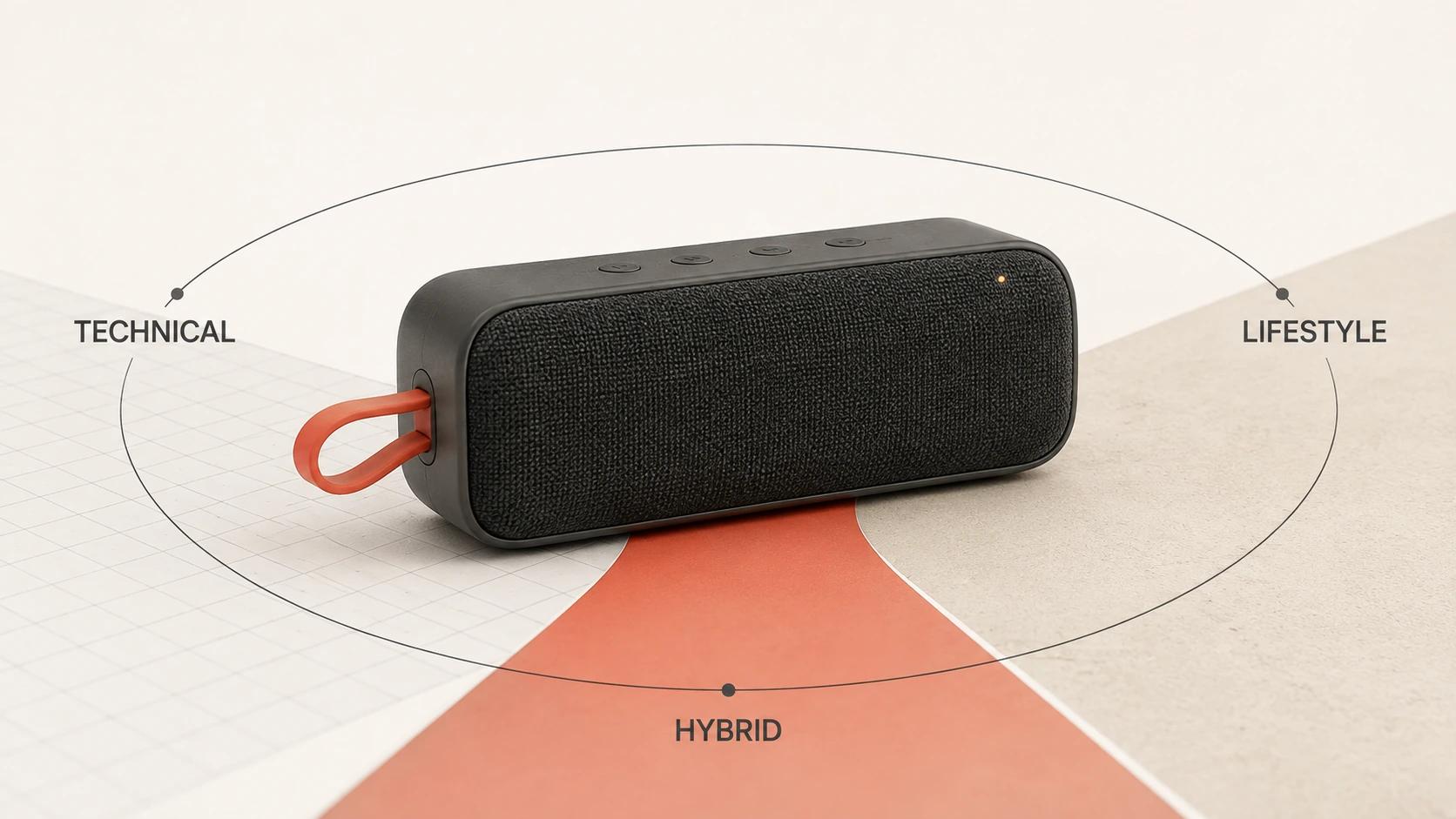
Choose a technical 3D product animation video when the buyer's main question is how the product works, fits or is assembled. Choose lifestyle when the question is where it belongs, how it is used or what kind of setting it suits. Choose hybrid only when the same decision genuinely needs both context and verified product proof.
That choice should be made before anyone polishes a storyboard. A technical film without controlled product evidence becomes decorative motion. A lifestyle film without an approved use context can imply things the product team never signed off. A hybrid film without a clear handoff usually feels like two treatments competing for the same seconds.
Use the broader 3D product animation format and use-case guide to map formats across the funnel. Use the guide to creating a 3D product animation for explanation design and purposeful motion. The narrower decision here is whether technical, lifestyle or hybrid language best fits the buyer question and available evidence.
Pick the buyer question before the visual style
The format is not a mood-board preference. It is a contract about which question the shots will answer and what evidence must sit behind those shots.
| Animation language | Buyer question it owns | Evidence on screen | Minimum useful inputs | Weak choice when |
|---|---|---|---|---|
| Technical | How does it work, move, connect or come apart? | Controlled views, verified motion, labels, cutaways or approved internal relationships | Correct configuration, geometry, mechanism limits, feature claims and technical reviewer | The decision is mainly about setting, identity or atmosphere |
| Lifestyle | Where does it fit, when is it used and what visual world does it belong in? | Product-in-context scale, surfaces, light, use state and art direction | Approved exterior, materials, environment brief, scale references and brand rules | The film must prove an internal mechanism or exact assembly sequence |
| Hybrid | Why should I want it, and what product fact supports that interest? | A deliberate transition between context and one or two proof moments | Both input sets, plus a named bridge shot and reviewers for each side | The brief cannot identify where context ends and proof begins |
A word such as "premium" does not answer the choice. A premium-looking film might be technical, lifestyle or hybrid. Rewrite the brief as one buyer question. If two questions remain, rank them. The primary question owns the opening, the largest share of screen time and the final recall shot.
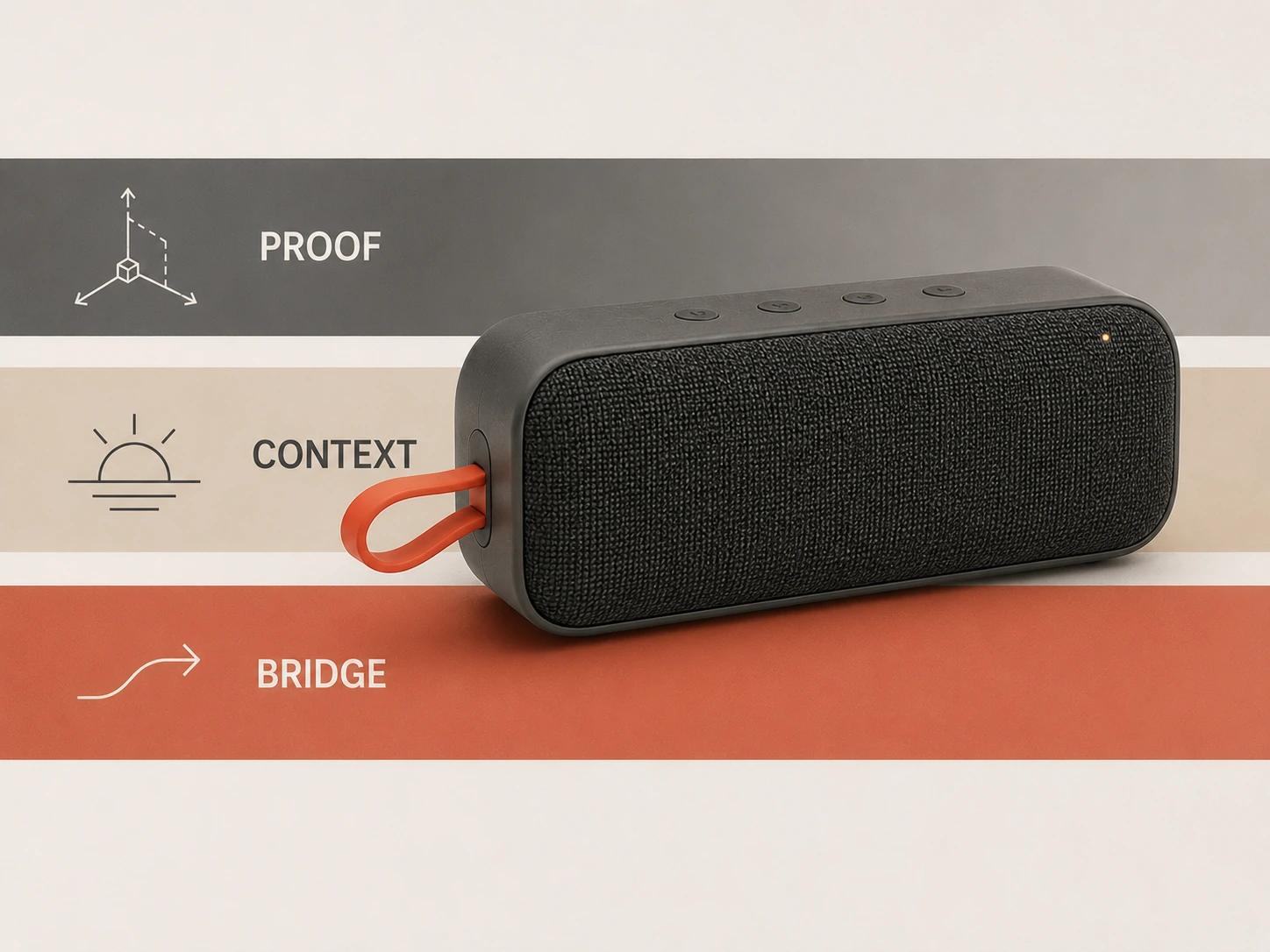
Compare three storyboards for the same product
Consider one brand-neutral portable speaker. The table below is an original Double Edged storyboard comparison, not a claim about the results a format will produce. The timings are illustrative, and every product action would still need approval against the real source pack.
| Story beat | Technical route | Lifestyle route | Hybrid route |
|---|---|---|---|
| Opening, 0-4 seconds | Hold a neutral three-quarter view and identify the feature under review | Establish the speaker at believable scale in one approved setting | Open in context, then isolate the product before making a product claim |
| Development, 4-10 seconds | Move the camera only as needed to reveal controls, interfaces or approved internal relationships | Let light, surface and restrained environmental motion establish the use state | Use one bridge action, such as a camera move through the grille into an approved component view |
| Proof, 10-16 seconds | Animate a verified direction, limit or assembly relationship and label only what needs explanation | Show the exterior feature in use context without turning atmosphere into a technical claim | Give the proof moment a clean technical frame; do not keep lifestyle effects over the evidence |
| Close, 16-20 seconds | Return to the complete product and restate the verified feature | End on the product, not the scenery | Return the proved feature to context so the two modes resolve as one thought |
| Approval question | Is every visible relationship and motion supported? | Is every context cue approved, plausible and non-claiming? | Can a reviewer point to the exact context-to-proof handoff? |
The technical route spends its visual budget on legibility. The lifestyle route spends it on context. The hybrid route has to fund both, so it should explain fewer product facts rather than rushing through a catalogue of them.
Use technical animation for a proof question
Technical language earns its place when a viewer needs to inspect a relationship that an exterior beauty shot cannot explain. Examples include a control sequence, a connection point, an airflow path, a moving assembly or a service-access step. The animation should show only the version and behavior the product owner has approved.
Start the shot list with a claim register. For each shot, name the visible claim, controlling source, product configuration, allowed simplification and approver. If an internal component is absent from the source geometry, do not invent it because the cutaway looks empty. If motion limits are unknown, show a static relationship or obtain the missing engineering decision.
Material and camera choices still carry meaning. Adobe's Standard Material documentation describes a PBR metal-roughness workflow in which roughness changes how polished or matte a surface appears and metallic changes its metallic response.[1] A technically correct model can therefore misread if the finish inputs are guessed. Record the approved finish and review it under a neutral lighting state before the dramatic grade.
Camera discipline matters too. Blender's camera documentation states that longer focal lengths produce a smaller field of view, while shorter focal lengths show more of the scene; an orthographic camera keeps parallel lines parallel and object size independent of distance.[2] That does not make one lens "accurate" for every product. It means the storyboard should state whether a shot is explanatory, dimensional-looking or intentionally cinematic, then hold that choice through review.
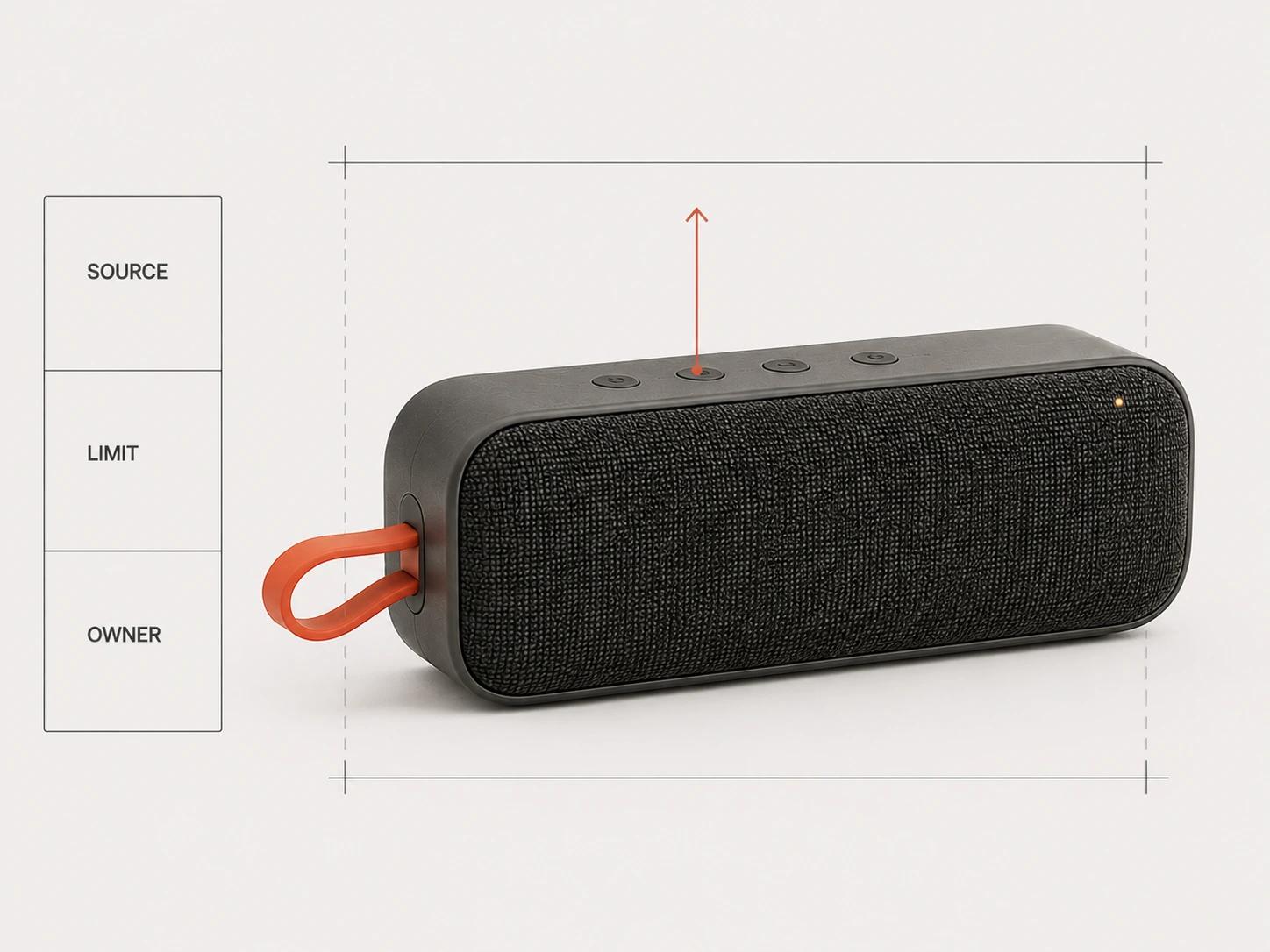
Use motion blur cautiously around the proof beat. Blender exposes shutter time as the interval between shutter opening and closing and notes that fast motion appears blurred in the direction of movement.[3] Review the decisive position frame by frame as well as at playback speed. The mechanism may move beautifully and still be unreadable.
When the format decision points toward cutaways or separated assemblies, move into the dedicated guide to exploded views and cutaways in 3D technical animation. This article chooses the language; it does not replace the planning and approval needed for those sequences.
Use lifestyle animation for a context question
Lifestyle language is useful when the product's exterior is understood but its place in the buyer's world is not. The setting can establish scale, storage, portability, adjacency to other objects, time of day or a visual use state. It does not require an actor. A shelf, work surface, travel case or outdoor table can carry context if the relationship is specific and believable.
The environment must not smuggle in unsupported capabilities. Rain, splashes, sand, impact, heat or extreme cold can look like atmosphere while implying durability claims. Treat each as a claim-bearing prop or effect. Remove it unless the product team supplies the applicable claim and approves the depicted conditions.
Build the lifestyle input pack around the approved product configuration, real dimensions, finish references, environment reference, surface behavior, permitted props and brand art direction. PBR controls such as roughness and metallic affect the reflections viewers use to read a surface, so a lifestyle grade should not turn matte polymer into lacquer or neutral metal into a different finish.[1]
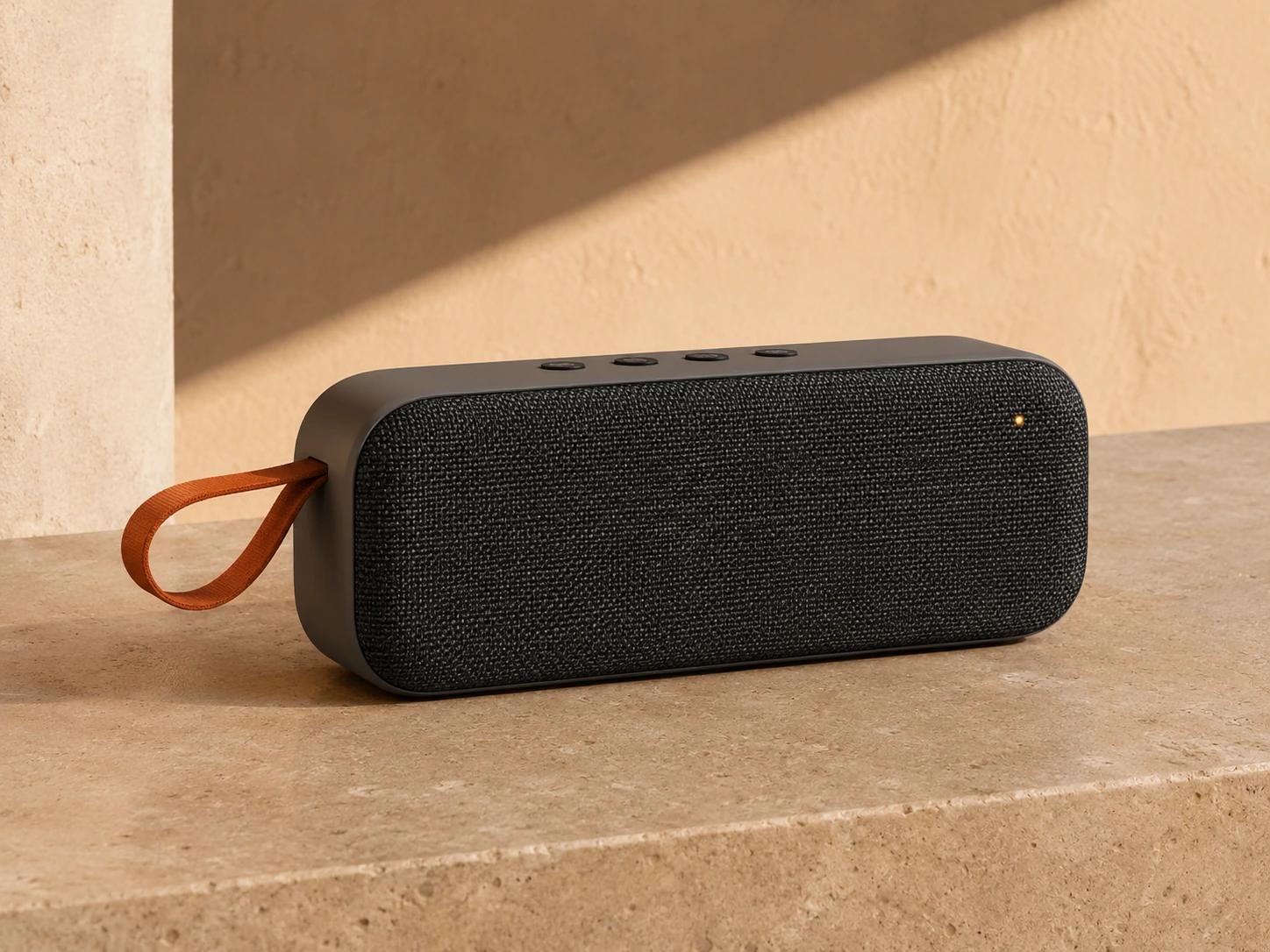
Keep the product as the shot's subject. If the composition remains equally effective after the product is removed, the environment is doing the storytelling alone. Pull back on props, shorten the establishing move or use light to separate the product from the scene without fabricating a performance claim.
Use hybrid only with a named handoff
Hybrid is not the safe middle option. It is a sequence with two different jobs. The context side creates a use frame; the technical side proves a product fact. A bridge shot tells the viewer that the language has changed.
A useful hybrid map has four rows:
| Beat | Job | Visual rule | Approval owner |
|---|---|---|---|
| Context | Establish the approved setting and use state | Lifestyle camera, environmental light, no technical labels | Brand or creative owner |
| Bridge | Move attention from the situation to one product feature | One continuous camera, light or material transition | Creative and product owners together |
| Proof | Explain the verified feature | Neutralized background, controlled motion, only necessary labels | Product or engineering owner |
| Return | Put the proved feature back into context | Restore the setting without adding another claim | Creative owner with final product check |
Write the bridge into the storyboard rather than discovering it in edit. If a glowing line travels through the product, define whether it represents a real path, a conceptual relationship or a purely graphic transition. If it is conceptual, label it in the review notes so nobody approves it as literal behavior by accident.
Hybrid should also have a stopping rule. Once the chosen proof question is answered, return to context or close. Adding a second cutaway, three more labels and another environment usually means the brief is trying to absorb the pillar guide rather than make one format decision.
Match the choice to the assets you actually have
A preferred treatment is not ready until its evidence exists. Use this readiness matrix before storyboarding.
| Available source pack | Technical readiness | Lifestyle readiness | Hybrid decision |
|---|---|---|---|
| Approved CAD, configuration and signed mechanism behavior | Strong for the named mechanism; materials and camera still need definition | Incomplete without approved exterior finish and context | Wait for the lifestyle pack or keep the film technical |
| Approved exterior model, materials and brand environment | Limited to verified exterior relationships | Strong for product-in-context work | Do not add internals merely to call it hybrid |
| Photography and drawings with no production model | Requires reconstruction and explicit uncertainty decisions | May support an exterior route after geometry, scale and finish review | Treat both sides as unready until one product master is approved |
| Existing model with unknown revision | Blocked until configuration is reconciled | Blocked if visible differences affect the current product | Do not hide revision uncertainty with fast cuts |
| Both approved packs and one ranked buyer question for each | Ready when the handoff and owners are named | Ready within the approved context | Hybrid is justified if one story needs both questions answered |
This gate prevents a common substitution: using visual confidence in place of source confidence. A clean render is evidence that a scene rendered, not that the depicted configuration, material or motion is true.
Write a decision brief, not a production manual
The brief for this decision can fit on one page:
- State the primary buyer question in one sentence.
- Select technical, lifestyle or hybrid and record why the other two were rejected.
- List every visible product claim with its source and approver.
- Name the exact product configuration and asset revision.
- Give each storyboard beat one job, one proof input and one review owner.
- List destinations, aspect ratios, crop risks and whether text must survive silent viewing.
- Define audio, captions and final acceptance states.
Do not assume one master frame solves every destination. YouTube, for example, documents 16:9 as its standard computer aspect ratio and says its player adapts to square and vertical uploads.[4] Use each destination's current specification to plan crops and text-safe compositions, then make controlled exports from the approved film.
If prerecorded audio carries information, captioning belongs in the brief. WCAG 2.2 Success Criterion 1.2.2 calls for captions for prerecorded audio in synchronized media, except when the media is a clearly labeled alternative for text; its guidance includes dialogue and meaningful non-speech audio.[5] Decide which sounds convey meaning before the audio mix is locked.
Review the failure mode that belongs to each format
| Format | Reject the review when | Ask before approval |
|---|---|---|
| Technical | Motion, internal geometry, labels or finish are unsupported; blur or camera movement hides the proof | Can the reviewer trace every visible fact to the named source and configuration? |
| Lifestyle | The setting overwhelms the product or implies an unapproved use, scale or durability claim | Does the scene say only what the product team intends it to say? |
| Hybrid | There is no clear bridge, the proof beat inherits decorative effects, or the two modes repeat rather than complement each other | Can we name the question answered before, during and after the handoff? |
Approve product truth and creative treatment separately. A shot can pass one review and fail the other. Record the decision against a dated cut so a later edit does not inherit approval automatically.
Make the format decision
Choose technical if one verified working relationship is the reason to watch. Choose lifestyle if the setting and use frame are the missing information. Choose hybrid if the same story needs both, the source packs support both and the storyboard contains an approvable handoff.
If those conditions are not met, narrow the film. A restrained 3D product animation video that answers one buyer question is more defensible than a hybrid treatment built on guessed internals or generic atmosphere.
For help turning the chosen language into a scoped production brief, review the 3D product animation service and bring the buyer question, product configuration, source assets and intended destinations.